

September 30, 2026
Major changes to the way new drivers and motorcycle riders are trained and licensed in Northern Ireland come into force from 1 October, with National Motorcyclists Council member, the British Motorcyclists Federation (BMF) taking a close interest in whether the new approach can improve novice rider safety without creating unnecessary barriers to motorcycling. The introduction of Graduated Driver Licensing (GDL) represents one of the most significant reforms of driver and rider training and licensing there for decades.
The underlying principle is that learning to drive or ride should be about developing a safe and responsible road user, rather than simply acquiring sufficient technical competence to pass a test. The reforms are intended particularly to address the disproportionate involvement of younger and inexperienced road users in serious collisions.
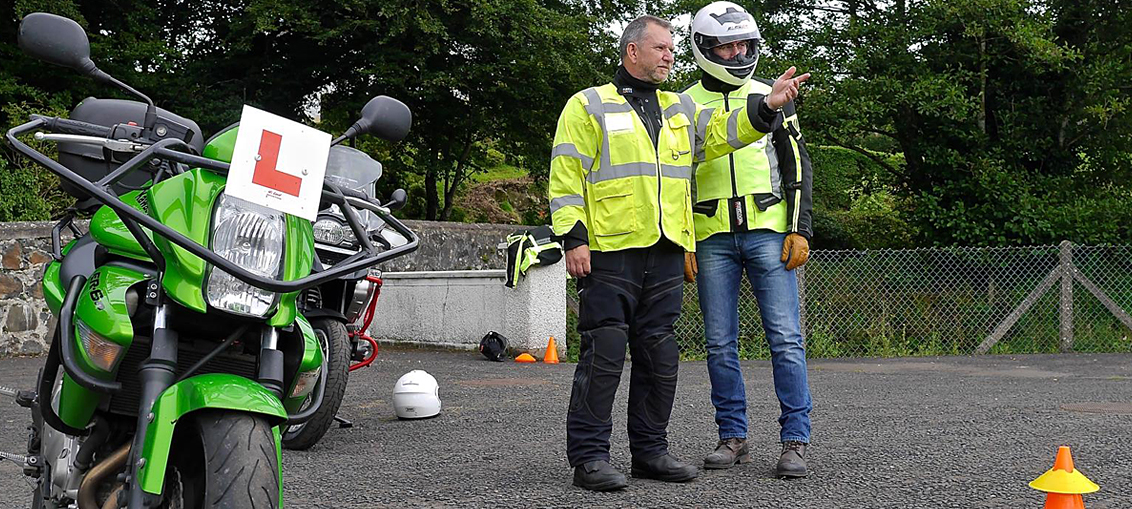
Although much of the publicity surrounding GDL in Northern Ireland has concentrated on young car drivers, motorcycles are explicitly included in important elements of the new system. From 1 October, new Category A1, A2 and A motorcycle learners will enter a more structured learning regime. A new Programme of Training and Compulsory Logbook will record their development before they can take their practical test.
The motorcycle programme contains 10 mandatory modules plus an optional motorway-riding module, covering knowledge, practical riding skills and the development of safer attitudes and behaviours. Each mandatory module must be completed and recorded, with final sign-off required before the practical test.
Importantly, the six-month Mandatory Minimum Learning Period being introduced for car drivers does not apply to motorcyclists. Nor will the new restrictions on young newly qualified drivers carrying young passengers late at night apply to motorcycle riders. Other changes include extending Northern Ireland’s existing new-driver/rider restriction period from 12 months to two years, during which the appropriate R plate must be displayed. The existing 45mph restriction will also disappear under the new arrangements, allowing newly qualified riders to ride at the posted speed limit.
There are transitional arrangements. Riders whose Category A provisional entitlement began before 1 October can continue under the existing arrangements and take the current practical test until 31 March 2027. From 1 April 2027, learners will need to have completed the new Programme of Training and Logbook before booking their practical test.
The NMC and BMF supports the principle that effective, high-quality training can play an important part in reducing motorcycle casualties. However, graduated licensing should not automatically be regarded as synonymous with better road safety. Any changes need to be supported by evidence that they will produce measurable safety benefits.
They must also take account of the potential consequences of making motorcycle licensing more complicated, expensive or difficult to access. Creating additional hurdles could discourage riders from undertaking further training and progressing towards a full motorcycle licence – precisely the opposite of what good licensing policy should seek to achieve.
Motorcycle training and testing is devolved in Northern Ireland, so the new system is distinct from the proposals being considered by the UK Government for England, Scotland and Wales.
The Government’s Road Safety Strategy, published in January 2026, includes a specific review of motorcycle training, testing and licensing. A accompanying DVSA consultation sought views on changes intended both to improve road safety and simplify access to motorcycling.
The Government has specifically identified the issue of riders continually remaining on provisional licences after taking the CBT and says it wants to encourage more riders to undertake further training and obtain a full motorcycle licence. It has highlighted riders using motorcycles for work, including delivery riders, as a particular priority.
The NMC believes the objective should be to create a clear, affordable and attractive pathway from novice rider through structured training to a full motorcycle licence. Northern Ireland could provide valuable evidence to inform wider Road Safety proposals across the UK
Northern Ireland is not simply introducing the same reforms currently being considered in Great Britain. There are important differences between the two systems. However, there is a common theme: moving motorcycle training away from treating minimum competence as the end point and towards structured learning, improved hazard awareness, better rider behaviour and progression through further training.
The Northern Ireland reforms therefore provide an important opportunity to analyse how this will work in practice, providing valuable evidence for future motorcycle training and licensing policy across the rest of the UK.
Commenting on the changes, BMF Chair Jim Freeman said: “The BMF and NMC support structured, high-quality training which demonstrably helps develop safer riders and reduce casualties. We all share the objective of reducing the unacceptable number of motorcyclists killed or seriously injured on our roads.
“But we must also be careful not to assume that simply making motorcycle licensing more restrictive or complicated will automatically make riders safer. Any changes must be evidence-led, proportionate and affordable and should encourage, rather than discourage, riders to undertake further training and progress towards a full motorcycle licence.
“Northern Ireland is taking a distinctive approach and we will be watching closely to see what the evidence tells us. If structured training produces safer riders, better hazard awareness and increased progression towards full licences, there may be valuable lessons for the rest of the UK. Equally, we need to understand whether any elements create unintended barriers to people taking up motorcycling or continuing their training.
“The BMF and NMC will remain fully engaged with Government, the DVSA, and our other partners and key stakeholders as the Government develops and implements its new Road Safety Strategy. We want motorcycling to be at the heart of that work and riders themselves to have a strong voice in shaping the future of motorcycle training and road safety.
“Our shared objective is better-trained, safer riders, with an accessible and affordable route towards gaining a full motorcycle licence.”
ENDS
Notes to Editors
1. Further information on Northern Ireland’s Graduated Driver Licensing reforms is available from the Northern Ireland Department for Infrastructure, including detailed guidance on how the new arrangements will operate. https://www.infrastructure-ni.gov.uk/articles/graduated-driver-licensing-faqs
2. For further information, please contact Craig Carey-Clinch on 07979 757484 | craig@uknmc.org
3. The NMC also publishes comment and shares relevant partner news and announcements on social media. You can follow the NMC on X: @OfficialUKNMC | Facebook: OfficialUKNC | LinkedIn national-motorcyclists-council
(Pic BMF)

